Daystar Selorm Atti
January, 2025
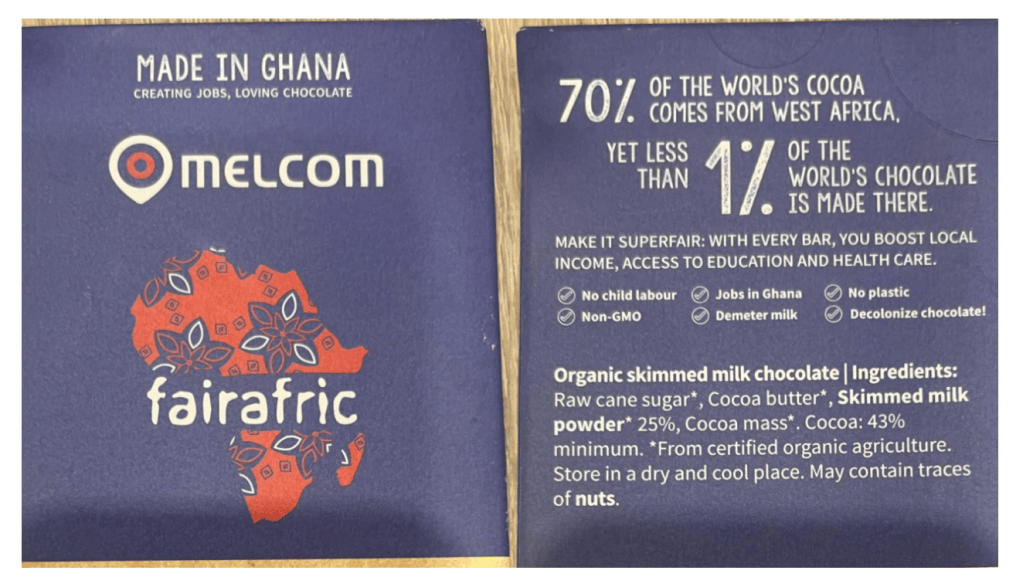
The packaging of this Ghanaian chocolate (Fairafric) effectively communicates a powerful marketing strategy that promotes the product and highlights Ghana’s significance in the global cocoa industry. Fairafric underscores a pressing economic imbalance by emphasizing that 70% of the world’s cocoa comes from West Africa, yet less than 1% of chocolate is manufactured there. This approach resonates with socially conscious consumers and creates a strong narrative around fairness and sustainability.
One key aspect of this marketing strategy is its ability to associate the product with ethical consumption. Claims such as “No child labour,” “Jobs in Ghana,” and “Decolonize chocolate!” align with global concerns about sustainable production and labour rights. By showcasing Ghana’s local production efforts and the use of organic ingredients, this chocolate positions itself as a premium product that aligns with consumer values.
The benefits for Ghana are manifold. First, the emphasis on local production helps retain more value within the country, potentially increasing incomes for farmers and workers involved in the supply chain. Secondly, it boosts the global visibility of Ghanaian products, paving the way for other local industries to gain similar recognition. Thirdly, associating the product with ethical practices enhances the country’s reputation as a responsible producer, which can attract more investment in agriculture and manufacturing.
Moreover, the packaging’s transparent messaging, including its “Made in Ghana” label, strengthens national pride and encourages Ghanaians to support locally made goods. This strategy could lead to increased domestic and international demand for Ghanaian chocolate, fostering economic growth and reducing reliance on raw cocoa exports.
This marketing approach promotes the product and champions Ghana’s role in the global market. It empowers local communities, promotes sustainability, and positions Ghana as a key player in the premium chocolate industry.

